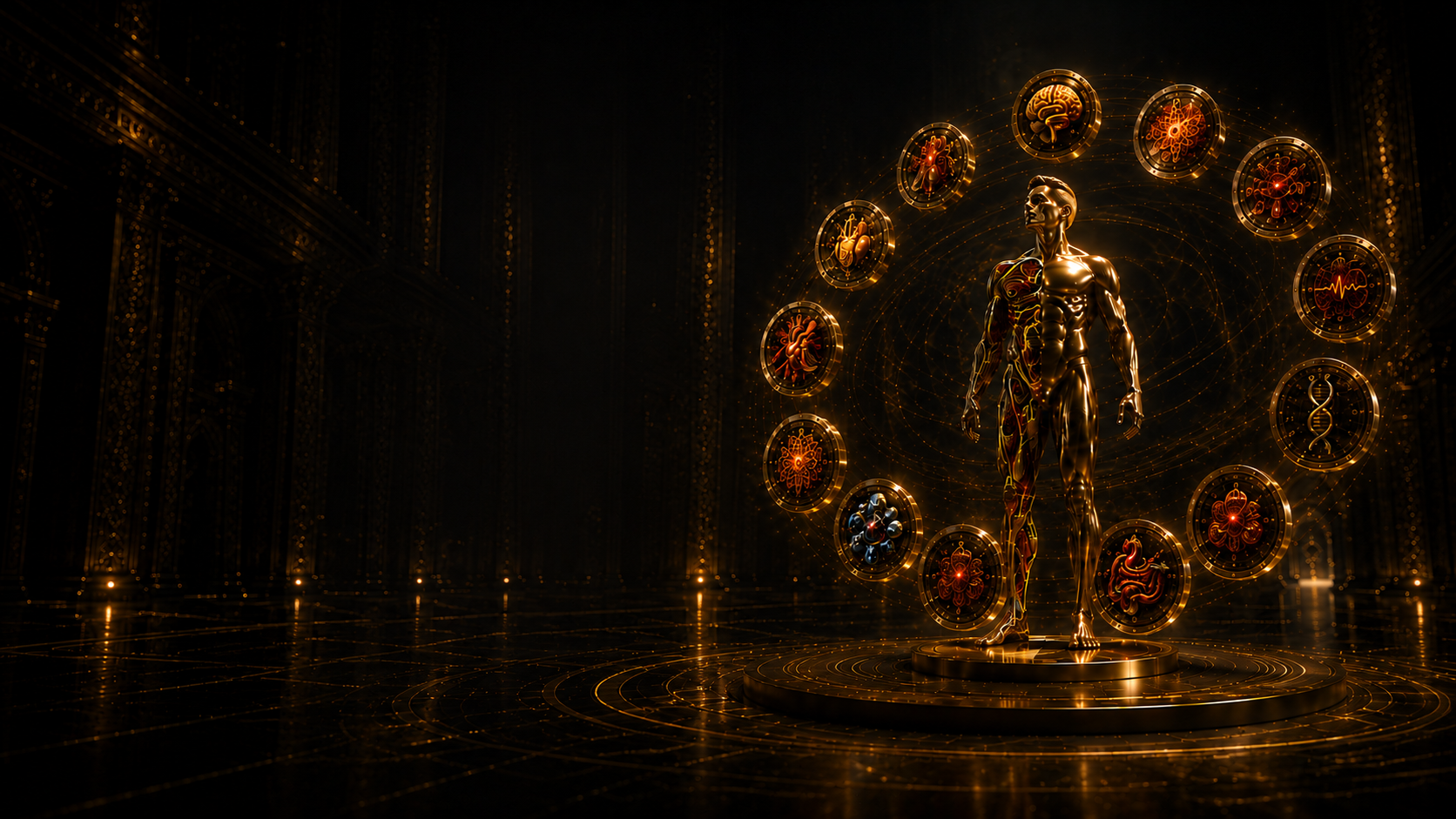
Most systems that explain people are built on one discipline. MBTI came out of Jungian typology. DISC came out of behavioral psychology. The Enneagram came out of a spiritual and personality tradition. The Big Five came out of statistical analysis of language.
Each of those is a real lens. Each one is partial. A framework built on a single discipline can only see what that discipline is equipped to see — which is why most personality systems can tell you what you do without ever explaining why it costs you what it costs.
There's a timing advantage too, and it's worth naming plainly. Those systems were built between the 1920s and the 1980s. Several of the sciences REGENESIS reads through didn't exist yet, or weren't usable. This framework was built with access to what those systems couldn't reach — and built to keep absorbing what comes next.
That's what the twelve are for. When a pattern shows up, it doesn't get described one way and left there. Every pattern gets asked the same twelve questions: what it costs you in energy, how it's wired, how it got shaped, what it's predicting, and how it behaves inside the whole system.